
TL;DR: In Bakersfield, testing one or two suspect materials, like a popcorn ceiling or a sheet of vinyl floor tile, typically costs a few hundred dollars for the site visit and lab analysis. A full pre-renovation or pre-demolition survey covering an entire structure costs more because it involves more samples, more lab time, and the paperwork needed to satisfy local air district rules before a permit is issued. The price moves on three things: how many materials get sampled, whether the lab runs standard PLM analysis or the more sensitive TEM method, and how fast you need the report back.
If you’re pulling a permit for a kitchen remodel or a full teardown on an older Bakersfield home, maybe a 1960s ranch near Eastchester or Westchester with the original popcorn ceiling and glue-down vinyl tile still in place, you’ve probably already run into the question: what is this going to cost, and why does the quote change so much from one job to the next? Kern County sits inside the San Joaquin Valley Air Pollution Control District, which means the answer isn’t just about your curiosity, it’s often a condition of your permit. Here’s what drives the number.
How much does asbestos testing cost in Bakersfield?
Most homeowners pay somewhere between $250 and $2,000 or more for asbestos testing in Bakersfield, with the final number set by scope, not location. A single-material spot check sits at the low end; a full structure survey ahead of a demolition permit sits at the high end.
| Scenario | Typical cost range |
|---|---|
| Single-material test, 1-2 samples (e.g. popcorn ceiling or one flooring type) | $250 - $450 |
| Small remodel scope, 3-6 samples across several materials (ceiling texture, flooring, siding) | $450 - $800 |
| Whole-home pre-renovation survey, 10-20 samples across all suspect materials | $700 - $1,300 |
| Pre-demolition survey for a full structure (needed for most demolition permits) | $900 - $2,000+ |
| Rush lab turnaround (24-48 hours), added to any scope above | +$75 - $200 per sample |
| TEM analysis used on top of standard PLM for specific material types | +$50 - $150 per sample |
These are typical industry ranges for the Central Valley, not a quote. Every property is different, and Arch Environmental Group provides a written scope, including the number of samples and the analysis method, before any work begins.
What actually moves the price up or down?
The price is driven almost entirely by how many samples get collected and how the lab processes them, not by the square footage of your house. A one-material spot check and a whole-home survey can come from the exact same property.
A few things change the number:
- Number of suspect materials. Popcorn ceiling, vinyl tile and mastic, drywall joint compound, stucco, roofing felt, and duct insulation are all separate “homogeneous areas” that need their own sample set.
- Samples per material. Sampling protocols generally call for multiple samples per material type so one lucky negative spot doesn’t clear an entire ceiling or floor.
- PLM vs. TEM. Polarized light microscopy (PLM) is the standard, lower-cost method for identifying asbestos in bulk material. Transmission electron microscopy (TEM) is more sensitive and more expensive, and it’s typically reserved for specific material types or point-count confirmation rather than a routine remodel screen.
- Lab turnaround. Standard turnaround runs a few business days; rushing a report to meet a closing date or a contractor’s start date adds a per-sample fee.
- Scope of the job. A homeowner checking one popcorn ceiling before a drywall patch pays far less than a contractor who needs a documented survey covering an entire structure for a demolition permit.
Do I need an asbestos survey before demolition or renovation in Kern County?
In most cases, yes. Federal asbestos regulations require a survey and advance written notice before demolition or significant renovation work begins, and in Kern County that requirement is enforced locally through the San Joaquin Valley Air Pollution Control District, the same district that covers Fresno, Tulare, and the rest of the valley.
This isn’t a Bakersfield-specific quirk; it applies anywhere in the district’s eight counties. If your project involves tearing out walls, ceilings, flooring, or an entire structure, the survey typically has to happen before the permit is finalized, not after demolition starts. Skipping it can hold up a project far longer than the testing itself would have taken. The EPA’s asbestos program outlines the federal rules behind this requirement, and California’s Division of Occupational Safety and Health (Cal/OSHA) adds its own worker-protection standards on top of them for any contractor who ends up disturbing the material.
Is asbestos testing worth it before a remodel?
For almost any Bakersfield home built before the mid-1980s, yes. Asbestos was used widely in ceiling texture, flooring, siding, and insulation well into that decade, and the only way to know what you’re actually working with is a sample and lab result, not a guess based on the home’s age.
Skipping the test doesn’t make the risk disappear; it just moves the discovery to a worse moment, mid-demolition, when a contractor’s saw hits a material that turns out to be positive and the job stops cold. Testing first costs a few hundred dollars and a short site visit. Finding out the hard way can mean a stalled permit, an unplanned abatement bid, and a crew standing around on the clock. Our earlier post on why you need an asbestos test before renovation walks through what happens when that discovery comes too late. If the home also predates 1978, it’s worth pairing the asbestos sample with lead paint testing on the same visit, since both materials show up in the same generation of housing stock.
What happens during an asbestos test, and how does that affect the price?
An asbestos test starts with a walkthrough to identify every suspect material in the work area, then a small sample is collected from each one and sent to an accredited lab for analysis, with results typically back within a few business days unless you’ve requested rush turnaround.
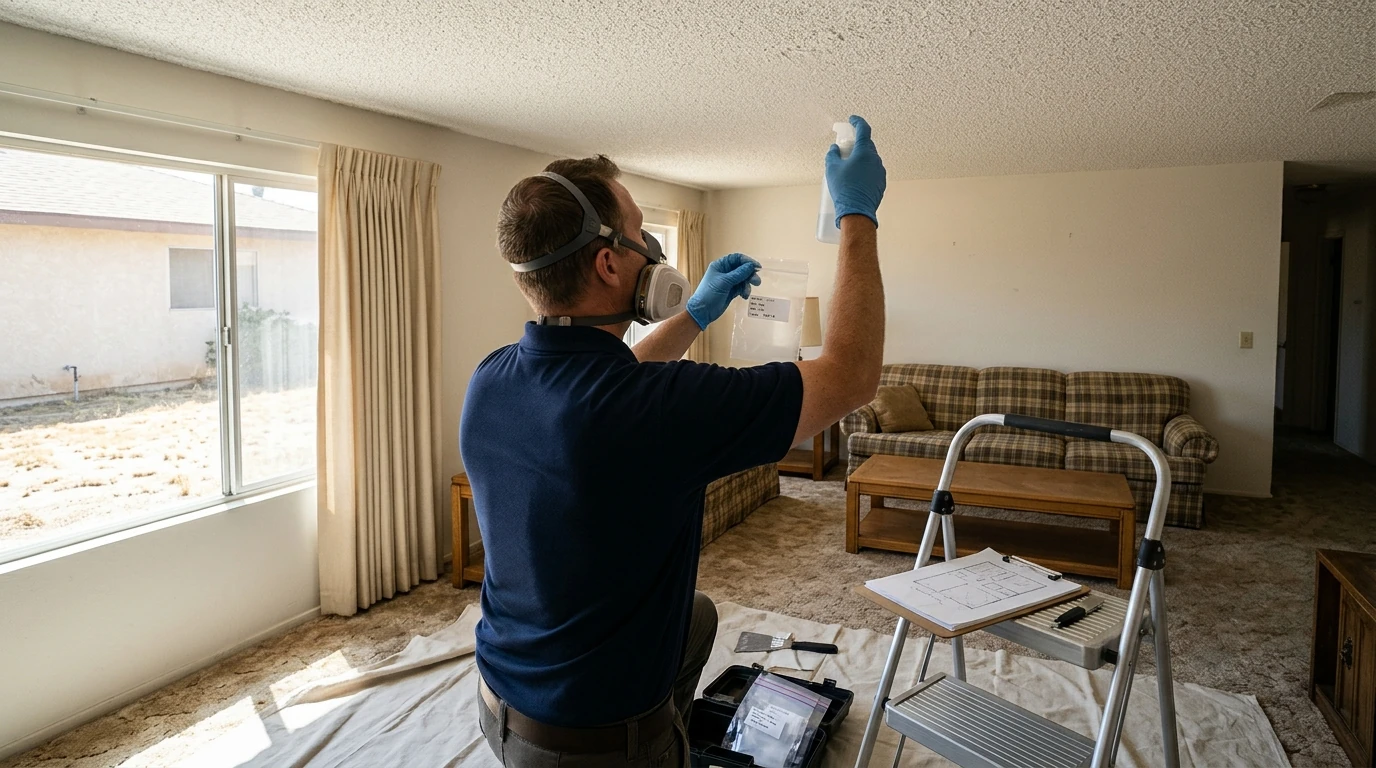
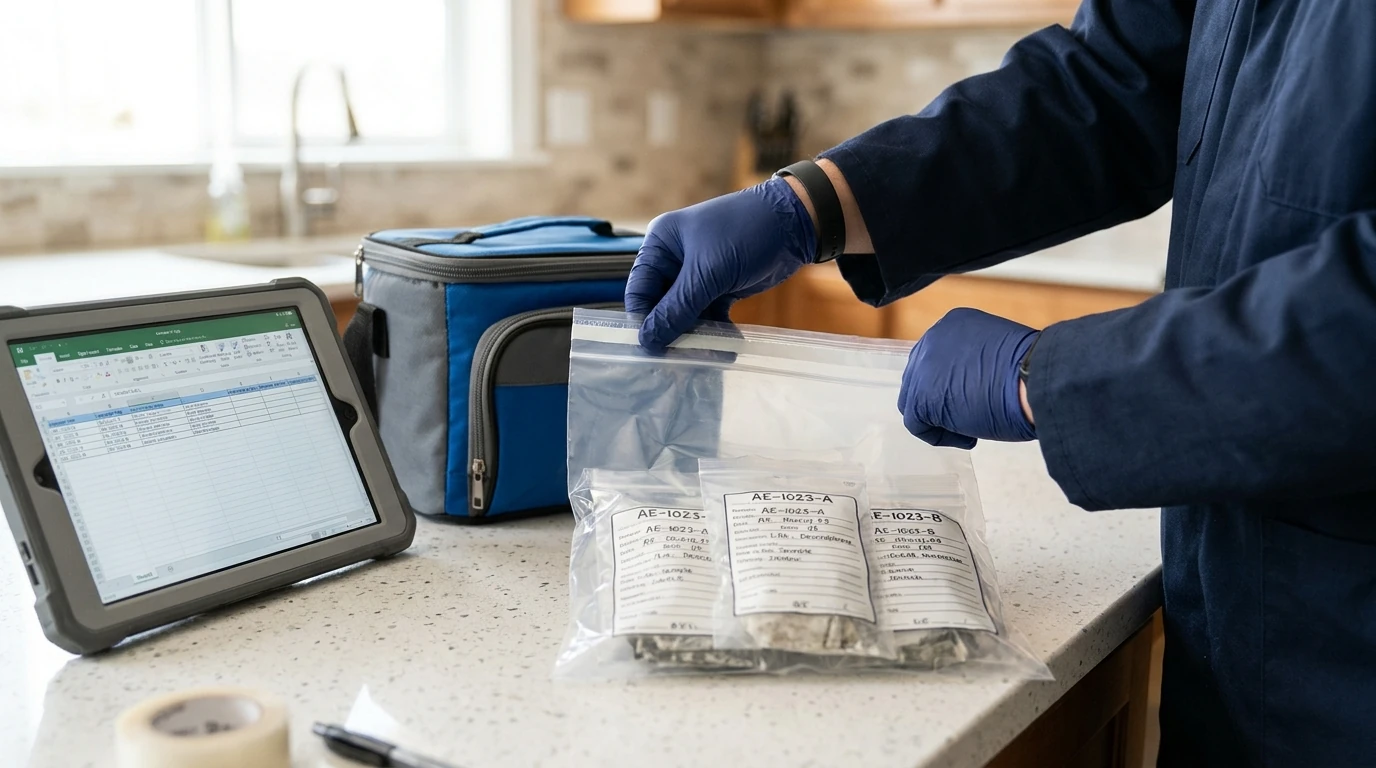
During the visit, the inspector mists the material lightly to limit fiber release, collects a small piece into a sealed, labeled sample bag, and logs its exact location on a floor plan or photo so the lab report ties back to a specific spot in the house. Each homogeneous material gets its own sample set. The bags travel under chain-of-custody documentation to the lab, where PLM analysis identifies whether asbestos fibers are present and at what percentage. Because Arch Environmental Group tests and does not perform remediation, there’s no incentive built into that result either way: the report is written to stand on its own and work with whatever licensed abatement contractor you choose, not to generate removal work for us.
If your project needs a documented survey before a Kern County permit goes through, or you just want one suspect material checked before a patch job, schedule an asbestos test and we’ll scope the sample count and turnaround before anything gets collected.
About Arch Environmental Group LLC
Arch Environmental Group LLC is an independent environmental testing company based in Kingsburg, CA, serving Bakersfield and the wider Central Valley since 2026. The firm holds a Certified Asbestos Consultant, Lead Inspector Assessor, and NIOSH 582 Microscopist credential, and samples are analyzed through accredited third-party laboratories rather than an in-house lab. Arch Environmental Group does not perform asbestos abatement or remediation, which keeps its testing and reporting independent of any removal work a homeowner or contractor later decides to pursue. The company maintains a 5.0 average rating across 34 Google reviews from Central Valley clients.
Need help now? Call Arch Environmental Group LLC at (559) 296-2088.